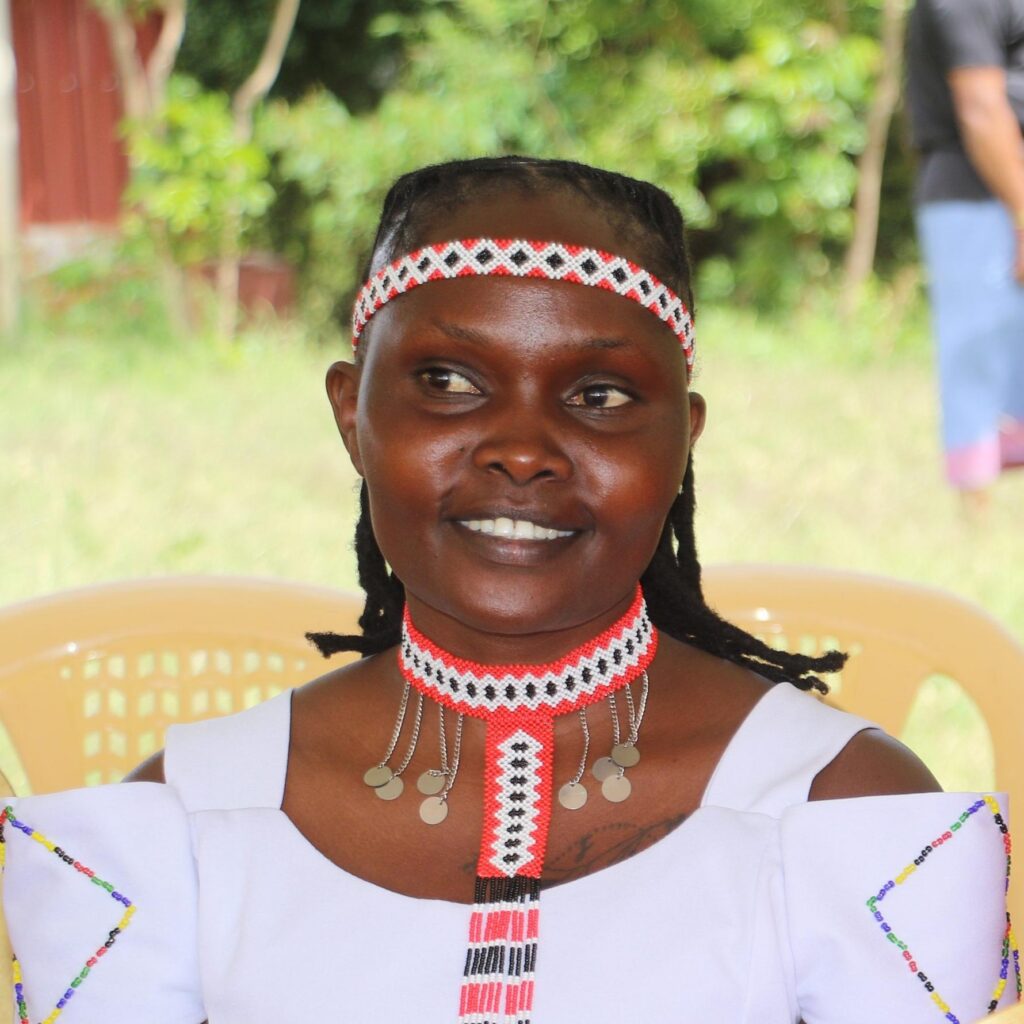
Elizabeth Maskonte serves as the Community Land Governance Lead, where she leads initiatives focused on advancing community land rights, strengthening community governance systems, and protecting communal resources. In this role, she works closely with Indigenous and pastoralist communities to support secure land tenure, guide community-led land registration processes, and strengthen institutions responsible for managing and safeguarding community lands/ territories.
Driven by a deep commitment to Indigenous rights and social justice, Elizabeth is passionate about ensuring that communities have the knowledge, institutional capacity, and collective voice needed to secure their land and determine their own development pathways. She is particularly motivated by the need to address long-standing land tenure challenges that threaten livelihoods, cultural identity, heritage, and the sustainability of pastoral landscapes.
At the heart of Elizabeth’s work is a strong belief in community-led governance, equity, and inclusive leadership. She believes that sustainable land tenure security is strengthened when women are empowered to understand their land rights and actively hold positions within community land governance structures. In her view, “women are futuristic in nature,” and when they participate meaningfully in decision-making, they help guarantee a more secure and resilient future for their communities.
Outside of her professional work, Elizabeth enjoys engaging deeply with Maasai cultural traditions. She values moments spent listening to elders narrate Maasai history and wisdom, preserving stories that connect people to their land and identity. She also appreciates traditional Maasai foods such as blood, the mixture of blood and milk, and blood and meat (Munono), which reflect the rich cultural heritage of pastoral life. She also enjoys spending time in nature—watching rivers flow, walking through forests, listening to birds sing, and herding livestock. These moments reconnect her with nature and the rhythm of life, reinforcing her deep respect for the land and the communities who depend on it.