
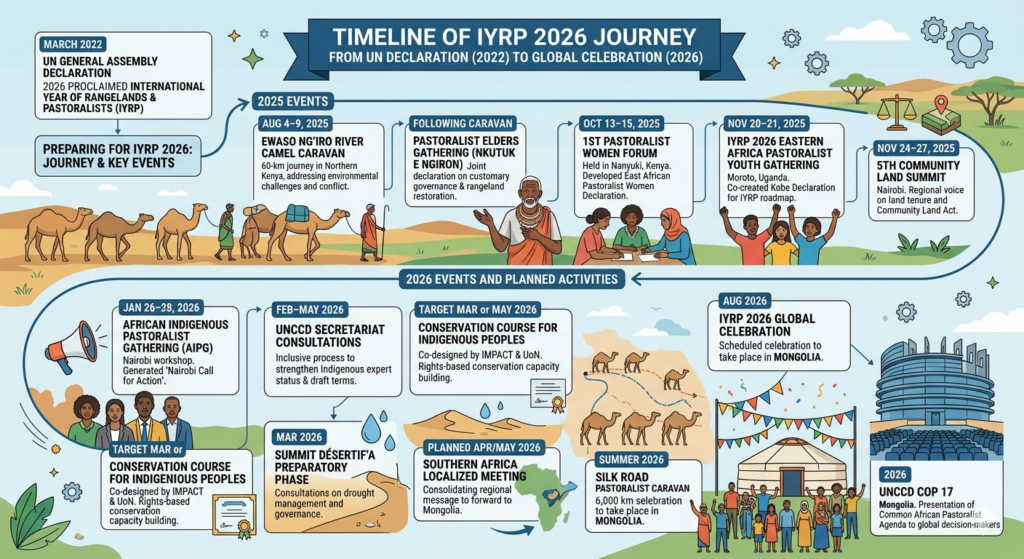
The International Year of Rangelands and Pastoralists (IYRP 2026) is a United Nations initiative that recognizes the vital role of rangelands and pastoralist communities in sustaining ecosystems, livelihoods, and global food systems. Rangelands cover nearly half of the Earth’s surface and support millions of people through livestock production, biodiversity conservation, and climate resilience, while also preserving rich cultural and indigenous knowledge systems that shape societies and local economies.
For IMPACT Kenya, IYRP directly aligns with our work in pastoralism, cultural heritage, and sustainable rangeland management. We collaborate with pastoralist communities to document and preserve indigenous knowledge, protect cultural practices, and promote sustainable use of rangelands. Through this, we contribute to broader global efforts that recognize pastoralists not as marginal communities, but as key actors in environmental stewardship, economic systems, and policy conversations.
IYRP concerns us because pastoralism remains central to livelihoods in Kenya’s arid and semi-arid lands, yet continues to face challenges including climate shocks, land fragmentation, and the erosion of cultural knowledge. The initiative provides an opportunity to elevate pastoralist voices, influence policy, and advocate for investment in systems that are both sustainable and resilient. For IMPACT Kenya, IYRP is a platform to strengthen our commitment to community-led action, ensuring that pastoralism is recognized, valued, and supported as a critical part of our present and future.
In response to the International Year of Rangelands and Pastoralists (IYRP 2026), IMPACT Kenya has actively contributed to advancing pastoralist visibility, dialogue, and action through a series of strategic movements and convenings across local, regional, and global levels. These engagements reflect our commitment to strengthening pastoralist voices, building networks, and influencing policy and practice around rangelands and livelihoods.
Our contributions include participation in and support for key platforms such as the Camel Caravan 2025, Pastoralist Women Forum, The East Africa Pastoralist Youth Gathering , Community Land Summit 2025,The African Pastoralist Gathering 2026,. We are also engaging with global processes through the Global Landscapes Forum Africa 2026.
Together, these efforts position IMPACT Kenya at the intersection of community action and global advocacy, ensuring pastoralist perspectives are meaningfully represented in shaping sustainable rangeland futures. Each of these engagements is further highlighted in the sections below.
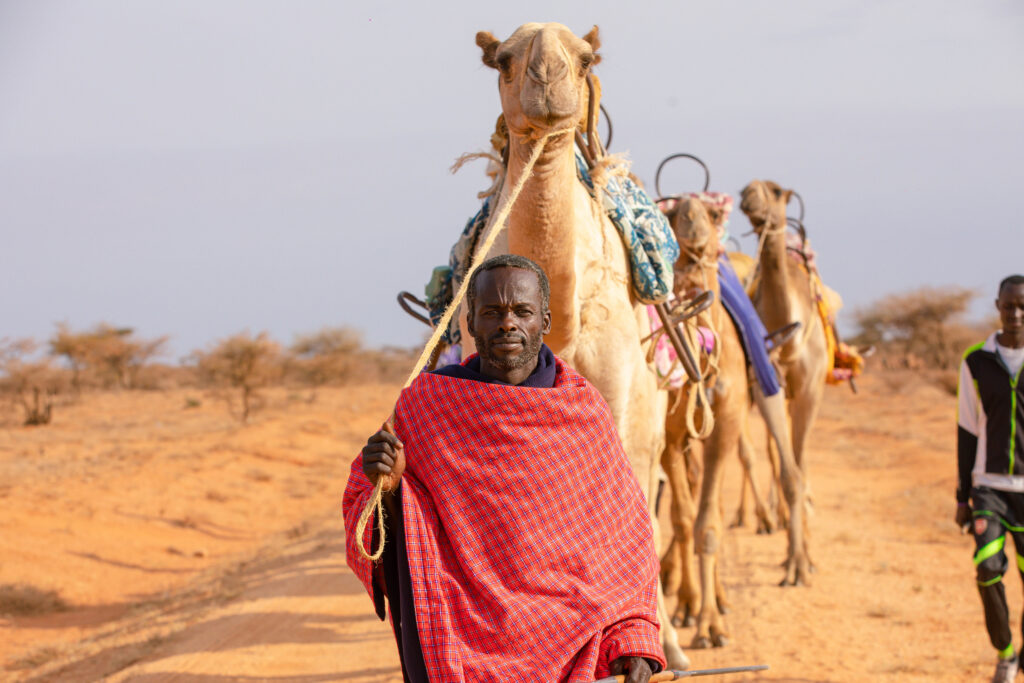
The Camel Caravan 2025 is part of the annual Ewaso Ng’iro Camel Caravan, a 5-day trek along the Ewaso Ng’iro North River ecosystem in Northern Kenya. The initiative brings together community members, conservationists, policymakers, and other stakeholders who walk over 100 kilometres alongside a caravan of camels, engaging directly with pastoralist communities whose livelihoods depend on the river.
The Caravan raises awareness on the urgent need to conserve the Ewaso Ng’iro River, which has experienced declining water levels due to climate change, unregulated upstream use, and environmental pressures.
These challenges continue to significantly impact downstream pastoralist communities, making the Caravan an important platform for highlighting shared concerns and promoting sustainable management of this critical resource. Through its movement across the landscape, the Caravan creates space for dialogue, cultural exchange, and collaboration. It provides an opportunity for communities to share lived experiences, strengthens appreciation of cultural diversity, and brings together key stakeholders—including government actors—to address water governance challenges and identify solutions for reducing resource-based conflicts.
IMPACT Kenya’s engagement in the Camel Caravan 2025 contributes to amplifying community voices and linking local realities to broader conservation and policy conversations. As part of the IYRP momentum, the initiative reinforces the role of pastoralist systems in sustaining ecosystems and economies, while supporting efforts toward improved water management, protection of catchment areas, and securing the livelihoods of pastoralist communities.
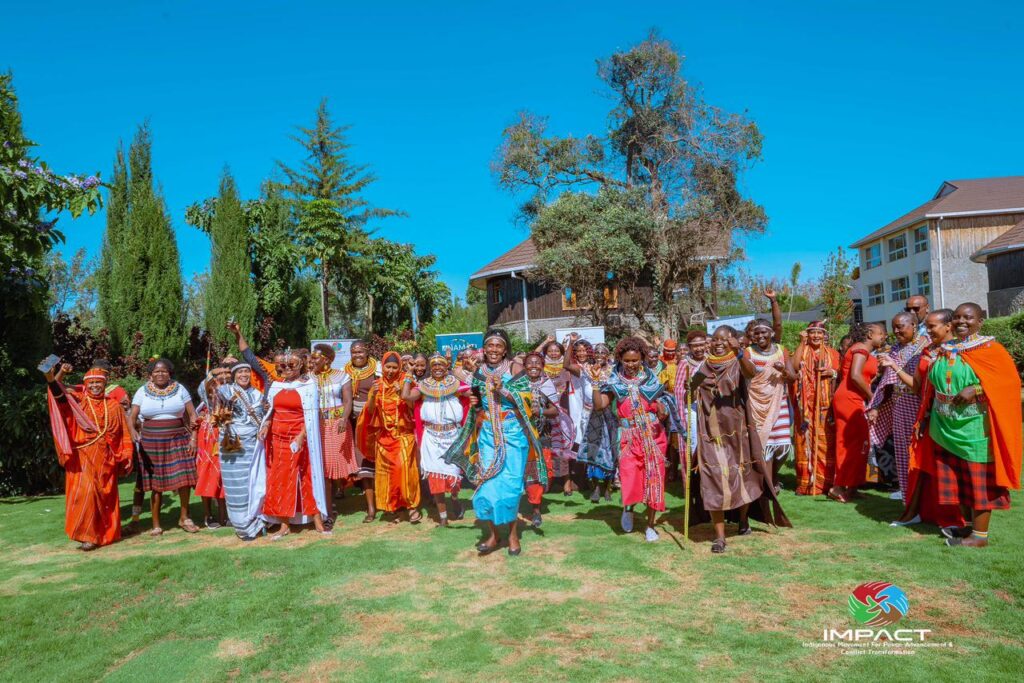
Pastoralism is far more than an economic cornerstone; it is a foundational ecosystem that sustains dryland economies and stabilizes fragile rangelands. Yet, the adaptive capacity of this way of life relies entirely on the invisible labor, traditional knowledge, and profound leadership of women. In deliberate preparation for the International Year of Rangelands and Pastoralists (IYRP 2026), IMPACT Kenya convened the historic 1st East African Pastoralist Women’s Forum in Nanyuki, Laikipia County. Bringing together grassroots women leaders from Uganda, Ethiopia, Tanzania, South Sudan, and Kenya, the forum built cross-border solidarity to confront systemic barriers to land, water, and grazing rights. The gathering culminated in the strategic endorsement of the “Laikipia Pastoralist Women Declaration,” launched on the International Day of Rural Women.
“Given the products and invisible labor invested by women to sustain pastoralism, not having favorable policies or economic opportunities to support them increases systemic vulnerabilities and directly reinforces gender inequalities.”
While institutional frameworks struggle to design effective dryland solutions, pastoralist women are actively executing sophisticated, locally driven environmental technologies on the ground:
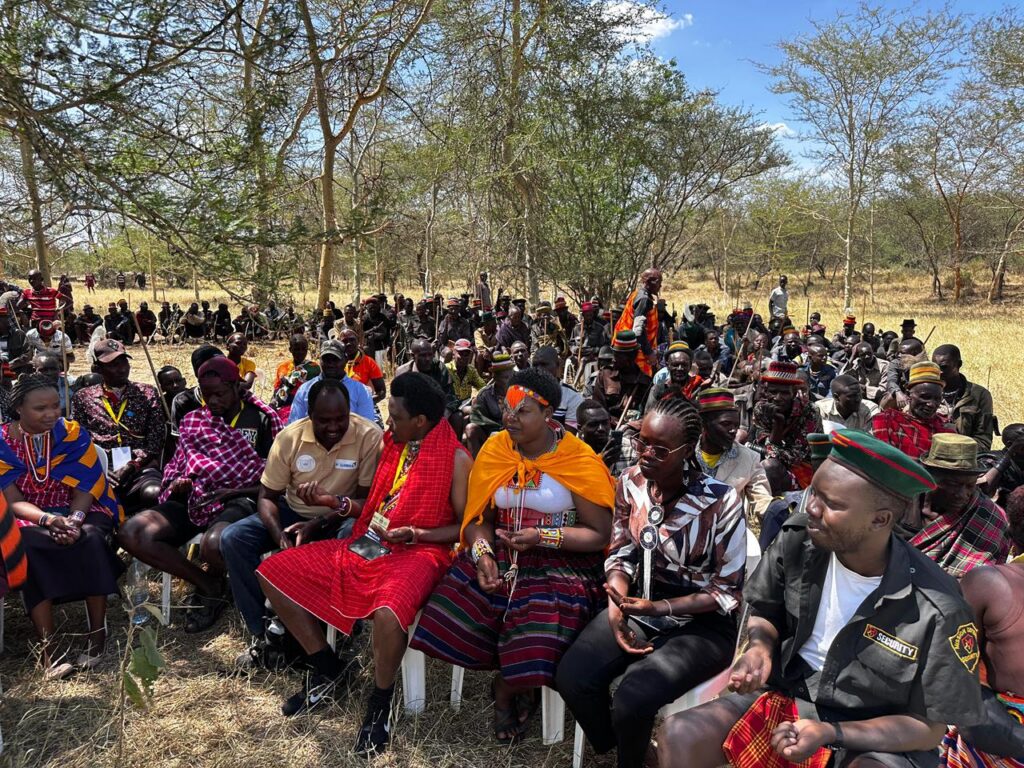
The East Africa Pastoralist Youth Gathering 2025 was a key regional platform that brought together pastoralist youth from Kenya, Uganda, Tanzania, Ethiopia, and South Sudan to engage on rangelands, climate resilience, land rights, and sustainable livelihoods. The gathering is part of the wider momentum toward the UN International Year of Rangelands and Pastoralism (IYRP 2026), which seeks to elevate pastoralism in global policy and climate action spaces. It created a space for youth voices to directly shape the future of pastoral systems in East Africa.
IMPACT Kenya participated in the gathering as part of its commitment to strengthening Indigenous and pastoralist youth voices in land governance and climate advocacy. The organization’s engagement focused on ensuring that youth perspectives are meaningfully included in conversations on community land rights, mobility, and rangeland management. By attending, IMPACT Kenya supported efforts to bridge the gap between grassroots communities and regional and global policy processes.
The gathering also aligned with IMPACT Kenya’s broader work on documenting Indigenous Technical Knowledge (ITK) and promoting intergenerational learning within pastoral communities. Participation allowed the organization to amplify community-led solutions and highlight the role of youth in sustaining pastoral mobility, ecological balance, and resilient livelihoods. It also strengthened collaboration with regional youth networks working on similar land and climate justice agendas.
Overall, IMPACT Kenya’s involvement contributed directly to the IYRP 2026 process by feeding youth-generated priorities into regional advocacy frameworks. The outcomes of the gathering support ongoing efforts to build a unified pastoralist youth voice calling for secure land tenure, inclusive governance, and recognition of pastoral mobility as a climate-adaptive system. This strengthens the positioning of pastoralist communities in East Africa within global rangeland and climate discussions ahead of 2026.
The Community Land Summit (CLS) is a regional platform that brings together communities, policymakers, practitioners, and development partners to advance dialogue and action on community land rights, governance, and sustainable management of communal landscapes. It provides a space for Indigenous Peoples and Local Communities (IPLCs), especially pastoralists, to collectively shape advocacy priorities on land governance. For IMPACT Kenya, CLS is an important engagement platform that aligns with its work on strengthening community-led land governance and contributing to the broader IYRP 2026 process.
The Community Land Summit 2025 was held in Nairobi from 24th to 27th November, bringing together a diverse range of stakeholders. These included government leaders, officials from the Ministry of Lands, the CEO of the National Land Commission, civil society organizations, and Indigenous representatives from 15 counties in Kenya. The summit also hosted participants from Uganda, Ethiopia, Tanzania, and South Sudan, strengthening regional exchange and collaboration on community land issues
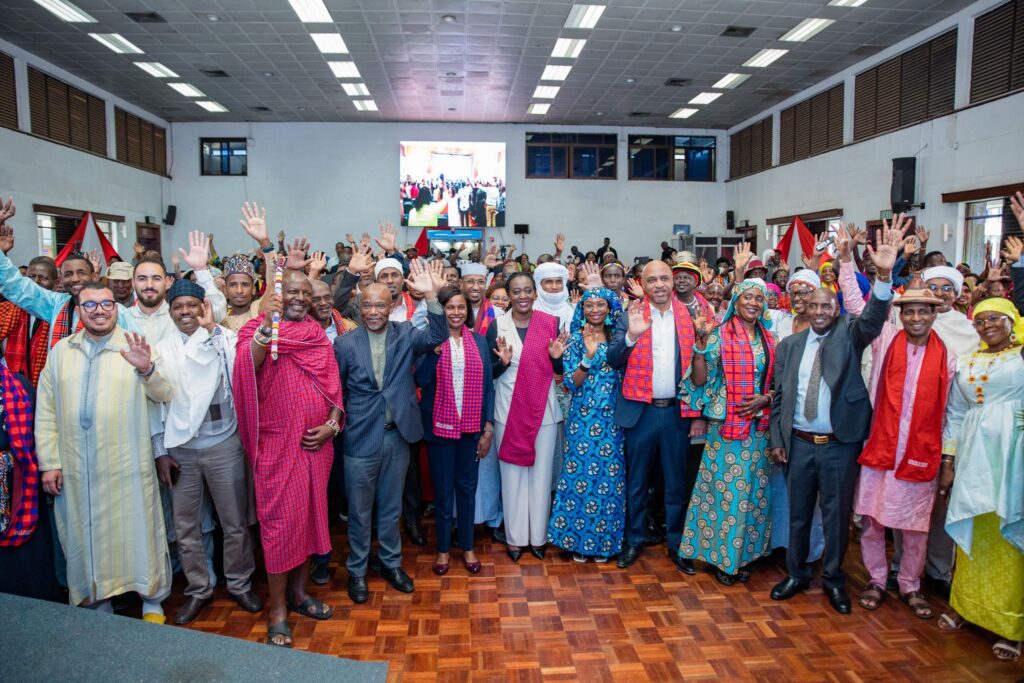
Key discussions focused on strengthening the implementation of community land laws, securing tenure rights, and addressing ongoing challenges such as land fragmentation, external pressures, and weak recognition of customary governance systems. Participants emphasized that pastoralist mobility and Indigenous Technical Knowledge (ITK) are essential for sustainable rangeland management and climate resilience. The summit reinforced the need to integrate these systems into policy rather than sidelining them.
A central outcome of the summit was the effort to build a unified regional voice for change linking land rights to global climate action. Under the theme “Enhance mobile Indigenous Peoples’ livelihoods through secure tenure rights and an effective pastoral policy environment for posterity,” stakeholders consolidated key Indigenous and community priorities. This process culminated in a regional declaration that will be submitted to government platforms and to the UN IYRP 2026 process in Mongolia, strengthening global recognition of pastoralism and Indigenous land systems.
The African Indigenous Pastoralist Gathering 2026 is a strategic regional convening that brings together Indigenous Peoples, pastoralist organizations, governments, and partners to strengthen Africa’s collective voice ahead of the UN International Year of Rangelands and Pastoralists (IYRP 2026) and UNCCD COP17 in Mongolia. It is not an annual event but a focused initiative aligned to key global policy moments on land, climate, and sustainable development.
The gathering was held in Nairobi, Kenya from 25th to 29th January 2026. It included two days of regional meetings (26th–27th January) and a field visit on 28th January to Indigenous pastoral communities in Suswa, Narok County. The event was organized by AFPAT, IMPACT Kenya, NDMA, and the State Department for ASALs and Regional Development, bringing together pastoralist stakeholders from across Africa.
Key objectives included highlighting the contributions and challenges of pastoralism, amplifying pastoralist voices in IYRP 2026 processes, and strengthening partnerships for sustainable development and the SDGs. The gathering also focused on building a common African agenda to be presented at UNCCD COP17, showcasing locally grounded pastoralist innovations and solutions.
IMPACT Kenya participated to strengthen Indigenous and pastoralist advocacy and ensure community voices shape regional and global policy spaces. Through this engagement, IMPACT Kenya contributed to amplifying Indigenous knowledge, promoting pastoral mobility, and advancing land tenure security. The outcomes feed directly into IYRP 2026 by positioning pastoralism as a key solution for climate resilience and sustainable rangeland management.
Rangelands cover more than half of the Earth’s land surface and support over two billion people, sitting at the absolute heart of global food systems, climate resilience, biodiversity, and livelihoods.
Yet, they remain widely misunderstood and chronically underinvested in, with nearly half of these vital landscapes currently under threat from climate change, land fragmentation, and erratic policy frameworks.
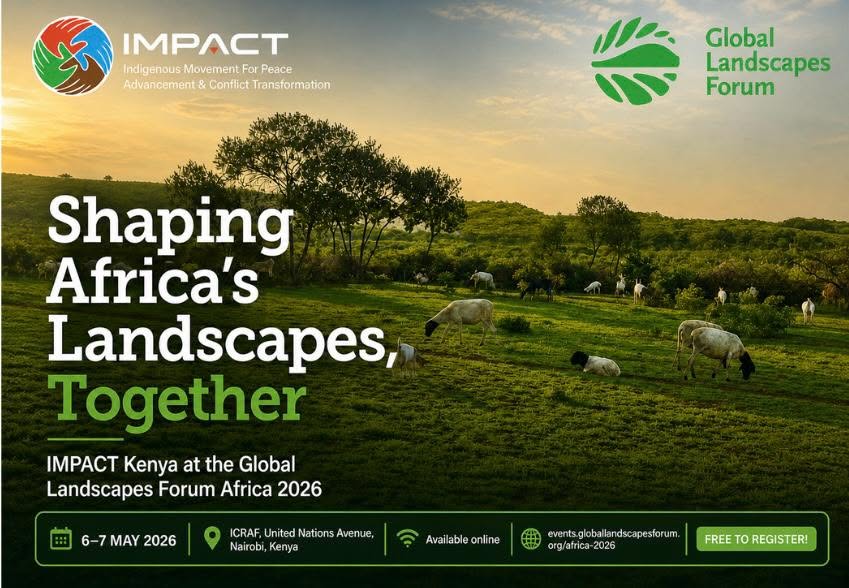
In this critical context, and in lockstep with the International Year of Rangelands and Pastoralists (IYRP 2026), the Global Landscapes Forum (GLF) Africa 2026 convened a special edition from May 6–7, focused entirely on elevating rangelands and pastoralist communities in global climate architectures.
For IMPACT Kenya, participating as a member of the organizing and knowledge committee was a strategic opportunity to ensure that high-level global discussions are directly grounded in lived, grassroots experience.
IMPACT Kenya’s core contribution culminated on the global stage during the high-level Opening Plenary, where we sat alongside a brilliant panel of insightful, global voices, including Silole Malih, Igshaan Samuels, Susan C. Gardner, Ph.D., Toni Kamau, and Fozia Noor. Together, we engaged in a vital, narrative-shifting dialogue aimed at dismantling deeply entrenched biases against dryland ecosystems and pastoralist production systems.
Our central message to the global assembly was clear and uncompromising: Rangelands are not wastelands, and pastoralist commons are not tragedies.
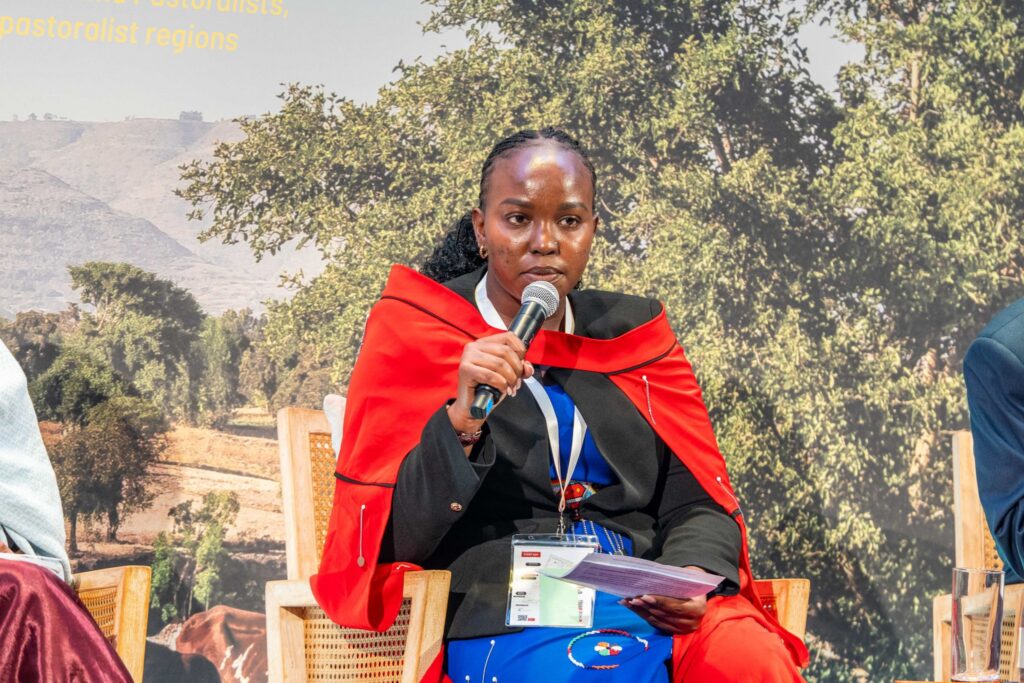
For decades, external development paradigms have been warped by the flawed “Tragedy of the Commons” theory. This concept assumes that shared lands are an ungoverned free-for-all where individuals act purely out of short-term self-interest, inevitably leading to environmental ruin. During the plenary, we systematically debunked this myth. In authentic pastoralist systems, shared rangelands are far from lawless. Instead, they are governed by sophisticated customary rules, deeply rooted social norms, and collective decision-making structures. These traditional governance mechanisms carefully regulate resource access, manage mobility patterns, and prevent overexploitation.
For decades, external development paradigms have been warped by the flawed “Tragedy of the Commons” theory. This concept assumes that shared lands are an ungoverned free-for-all where individuals act purely out of short-term self-interest, inevitably leading to environmental ruin. During the plenary, we systematically debunked this myth. In authentic pastoralist systems, shared rangelands are far from lawless. Instead, they are governed by sophisticated customary rules, deeply rooted social norms, and collective decision-making structures. These traditional governance mechanisms carefully regulate resource access, manage mobility patterns, and prevent overexploitation.
As Kenya took the global center stage as the official host country for World Desertification and Drought Day 2026, the global conversation converged on a theme that sits at the very heart of our mission: “Rangelands: Recognize. Respect. Restore.”
For IMPACT Kenya, this global moment in Kilifi County was not just an occasion for speeches; it was an opportunity to demonstrate that true landscape restoration is impossible without securing the lifelines of the communities who protect them. To bridge regional policy with practical action, we brought together community members from Samburu, Isiolo, Marsabit, and Laikipia to Kilifi, fostering cross-regional solidarity and proving that dryland resilience is a shared struggle requiring shared solutions.
At the core of our WDDD 2026 engagement was a massive investment in climate-adaptive infrastructure, focusing on the ultimate tool for rangeland resilience – water security.
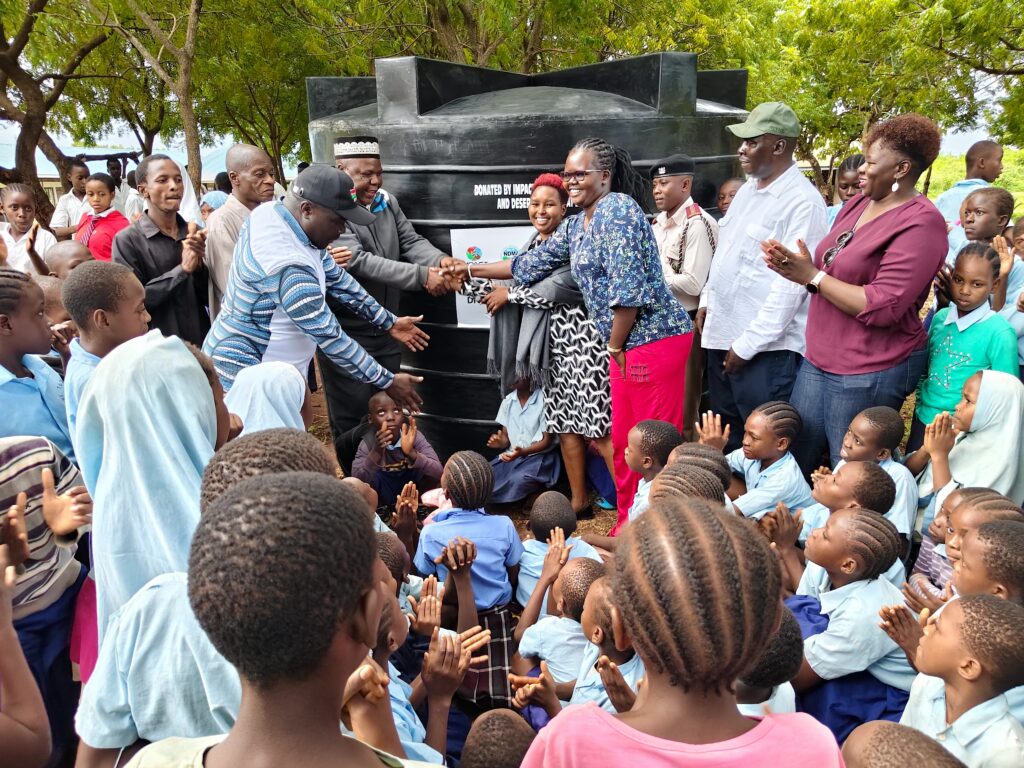
1. Stabilizing Learning Environments through Rainwater Harvesting
Dryland degradation heavily impacts community structures, particularly schools. To mitigate this, IMPACT Kenya invested Ksh 1,320,000 to install 10 rainwater harvesting tanks, each with a 10,000-liter capacity, across Kilifi County. By creating a collective 100,000 liters of storage, we are enabling schools store rainfall water for access to clean water and maintain educational consistency during severe dry spells.
The beneficiary schools include:
Kilifi South Sub-County: Vipingo Central Primary School, Vipingo Secondary School, and Msumarini Primary School.
Kaloleni Sub-County: Tsangatsini Primary School, Madzimbani Primary School, Mkuluni Primary School, Ikanga Primary School, Gandini Primary School, and Pagayambo Primary School.
Magarini Sub-County: Vithunguni Primary School.
Beyond school environments, sustainable landscape management requires decentralized water access for pastoralist and agro-pastoralist communities to ease grazing pressure on fragile ecosystems. In Bamba Ward (Ganze Sub-County), IMPACT Kenya invested Ksh 1,657,501.67 into the Karimani Water Pan Reticulation Project.
This community-led climate asset features:
An 850-meter pipeline extending from the Karimani Water Pan to a central community water point.
A clean, solar-powered vertical multistage pump system ensuring zero-emission water delivery.
A 5,000-liter storage tank feeding localized communal water kiosks.
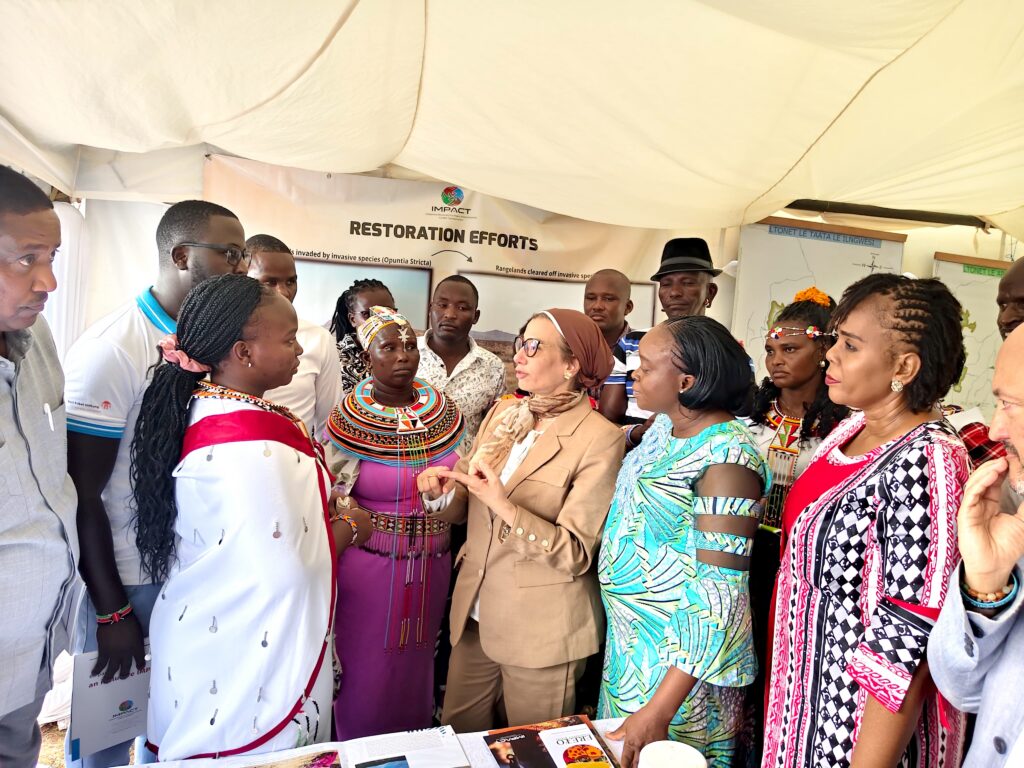
A defining moment of our WDDD 2026 engagement was the IMPACT Kenya exhibition booth. Here, community representatives from Samburu, Isiolo, Marsabit, and Laikipia directly showcased their grassroots initiatives, traditional ecological knowledge, and scalable solutions for combating rangeland degradation and climate-induced drought.
We were deeply honored to host Dr. Yasmine Fouad, the Executive Secretary of the United Nations Convention to Combat Desertification (UNCCD), at our booth. Dr. Fouad expressed a keen, focused interest in the Shepherding the Future: Building an Common African Indigenous Pastoralist Agenda, the framework consolidated during the African Indigenous Peoples Gathering earlier this year.
In her dialogue with our community leaders, Dr. Fouad strongly reiterated a vital principle that mirrors IMPACT Kenya’s
core advocacy: the indispensable presence of pastoralists in all spaces, particularly high-level international arenas. She emphasized that these global platforms must serve as spaces where frontline communities do not just observe, but actively voice the challenges they face, present tested indigenous solutions, and directly influence the local and global policies that dictate their livelihoods.