

Could carbon be the new “elephant in the room”, a global pursuit where everyone seeks a stake in, yet few are willing to confront the uncomfortable questions it leaves behind?
Carbon markets are rapidly gaining momentum, presenting economic, environmental, and social opportunities. But as this wave accelerates, a critical question remains: are the stewards of the land rightfully, meaningfully and equitably included? Are communities stakeholders, or merely beneficiaries on their own land and from their own sources of revenue?
A sentiment from the ground captures this tension vividly:
“Carbon ni ya wenye nguvu, ni ya wenye wanajua kupigana na wanaweza leta vurugu ndio wanyamazishwe na pesa, sisi wengine wote tunapewa mia mia kwa mikutano ya Free, Prior and Informed Consent (FPIC)”
Which translates to: “Carbon is for the powerful, for those who know how to fight and can cause chaos so they can be silenced with money. The rest of us are just given small token amounts during the Free, Prior and Informed Consent (FPIC) meetings.”
This reality raises deeper questions: Is the approach truly bottom-up, or is it still top-down in practice? And is FPIC a meaningful participatory process or sometimes reduced to a box-ticking exercise meant to arrive at a quick “yes” or “no”?
Ideally, Free, Prior and Informed Consent is not a procedural formality. It is a lived and ongoing process, one where communities receive information early, understand it fully, internalize it, and are able to give informed feedback without pressure, rush, or manipulation.
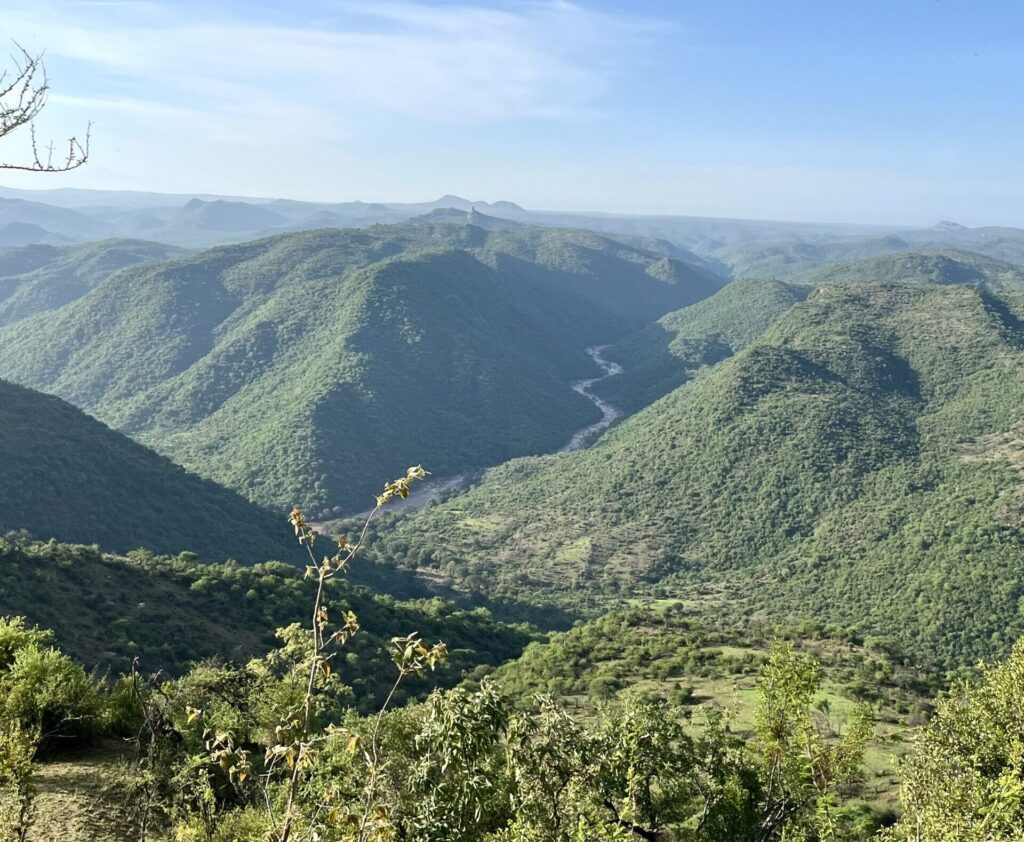
Amid the vast landscapes of Laikipia, these questions took centre stage. Community voices from Il Ngwesi, Lekurruki, Leparua, Nkutuk e Ngiron, and Naibunga Community Lands, including Murpusi, Il Polei, Munishoi, Nkiloriti, Musul, Kijabe, Tiamamut, Koija, and Il Motiok, gathered alongside diverse actors working at the intersection of land tenure rights, climate justice, conservation, and the equitable distribution of resources accruing from carbon credits for a grounded and timely dialogue.
Because to truly understand the promises and pitfalls of carbon initiatives, we must move beyond boardrooms and policy spaces into community landscapes, listening directly to those who live with, depend on, and protect these ecosystems. Much like in Maa tradition, where conversations held under a tree signify seriousness, openness, and collective reflection, this was no mere meeting but a pivotal convergence rooted in lived realities.
As carbon credits continue to gain traction globally, Kenya is emerging as a significant player, leveraging its rich ecosystems and expanding portfolio of climate initiatives. From landscape restoration to clean energy solutions, the opportunities are vast and promising.
However, as momentum builds, underlying concerns cannot be overlooked. Persistent questions around land ownership, fairness in benefit-sharing, access to information, and gaps in regulatory frameworks continue to shape how communities engage with these processes.
In the midst of this progress, a critical reflection remains: are these systems truly inclusive, and do they deliver meaningful value to the people on the ground?
A light moment emerged when a question was raised, what exactly is carbon? What is this “thing” that has attracted so much attention, investment, and global ambition?
It was at this point that a community member noted that it is difficult to meaningfully engage with something one does not fully understand. And in many ways, this brings us back to a fundamental concern: are communities truly aware of what carbon credits and carbon markets are, and what they mean for their land, livelihoods, and future?
A community member posed a question that strikes at the very heart of community sovereignty:
'If I rear a cow, nurturing it from birth until it reaches its prime, and then decide to sell it, who determines the price? The owner or the buyer?'
This is more than a matter of commerce; it is a trial of agency. If we permit the buyer to dictate the value of what we have bled to build, do we truly own the fruit of our labour? Or have we unknowingly become unpaid caretakers for a world that values our convenience more than our sacrifice?
We must confront the ultimate tension: who defines the worth of a life’s work—the soul who knows its history, or the stranger who only sees its end? This struggle for economic self-determination is not merely about the physical animal, but about the right of the producer to stand as a sovereign partner in the global market.
Perhaps it is this exact question that must guide the future of carbon markets. In this emerging economy, will communities be the ones setting the terms based on their ancestral stewardship, or will they merely be adapting to terms set by other actors? For sovereignty to be real, the “owner” of the land and its benefits must be the one who defines its value.