Search
Close this search box.

National Peace Summit 2022

National Peace Summit 2022

Responses to address the land and natural resource conflict have been changing in scope and depth over the years. The main actors in peace building include government, Civil Society Organizations (CSOs), Faith-Based Organizations (FBOs), political leaders, traditional leaders, artists, and individual men and women among others.

The government has initiated several reforms and established several institutions and platforms,this is in addition to mainstream security apparatus like the police and the army. These institutions are the National Steering Committee (NSC) on peace building and conflict management, District Peace Committees (DPC), National Crime Research Centre (NCRC), National Conflict Early Warning and Early Response System (NCEWERS), Kenya National Focal Point on Small Arms and Light Weapons (KNFP), and Independent Policing Oversight Authority (IPOA). These institutions have been implementing their mandates with varying degrees of success. It is also paramount to note the ADR/AJS used in dispute resolution in the context of land and natural resource are used by community leaders. The months leading up to, and after, elections have been the most violent periods in Kenya’s post-independence history, with thousands killed and hundreds of thousands displaced in election cycles. , Conflict trends are likely to heightened especially now that the region is also experiencing serious drought and negative impacts of climate change on their livelihoods and natural environment causing limited access to water and pasture for livestock.

With this background, and realizing that conflicts are affecting and threatening the future of pastoralist communities from the six counties, IMPACT in consultation with the county governments convened the peace summit in Nanyuki, Kenya to provide an opportunity for communities and leaders to agree on strategies that contribute to reduction of conflicts in the target counties of Laikipia, Samburu, Isiolo, Baringo, Marsabit and Turkana.

Watch the full video of the Peace Summit:

Together, we make an impact.

Stand in solidarity with Indigenous peoples for land rights, sustainable livelihoods, and cultural preservation.
Camel Caravan 2023

Camel Caravan 2023

11th Edition—Collective Conservation and Restoration of Ewaso Ng’iro North Ecosystem

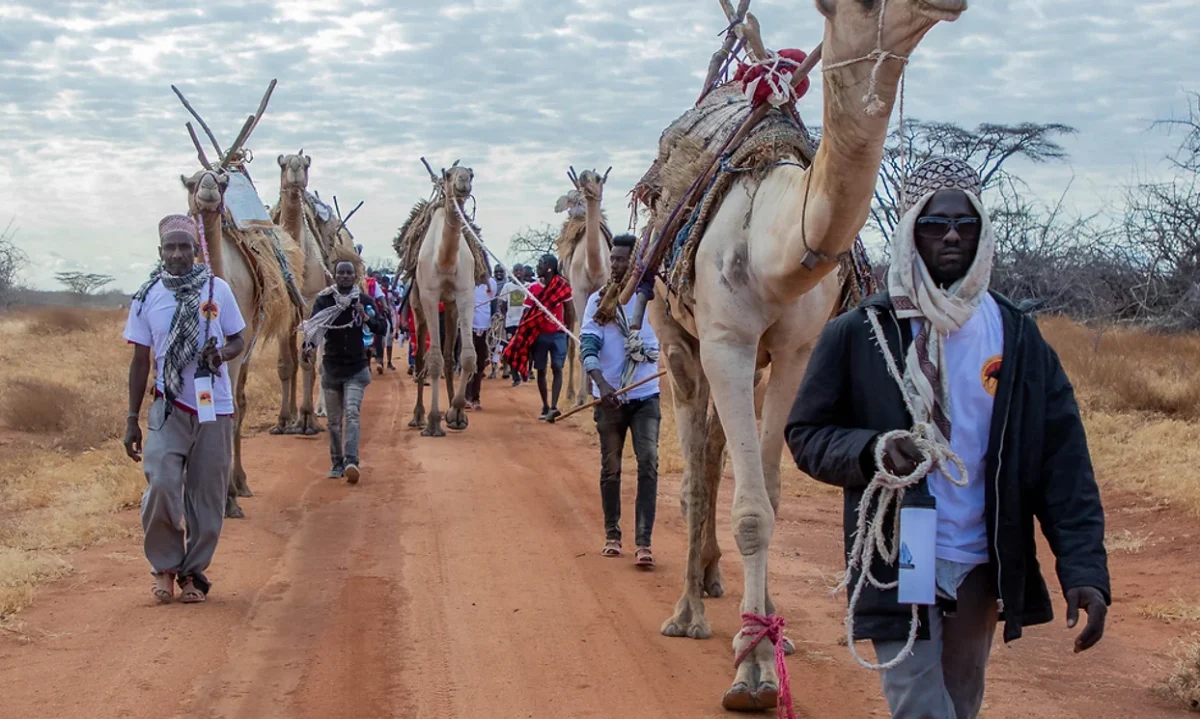
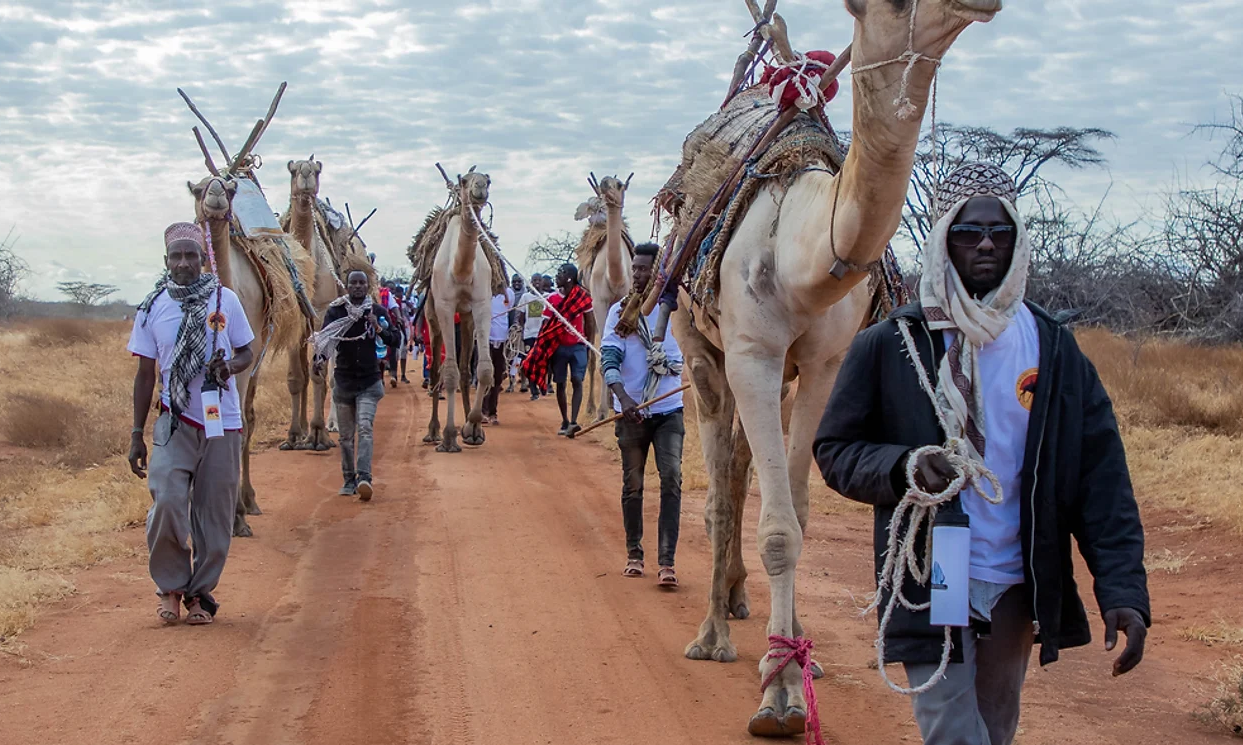
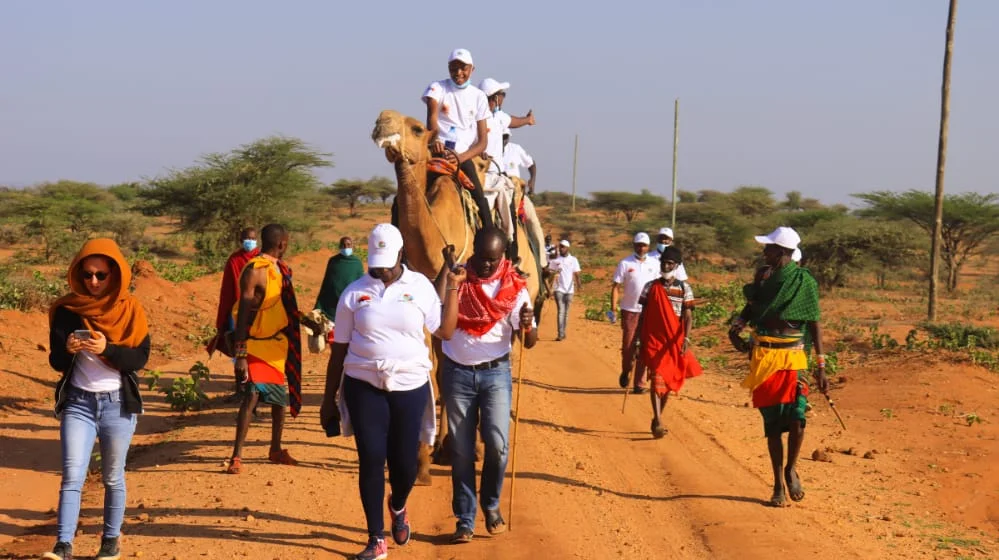
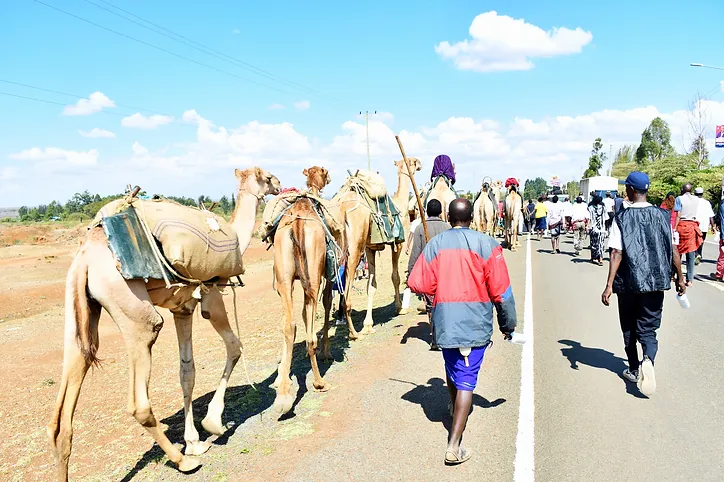
The Ewaso Ng’iro Camel Caravan concept was first initiated in 2014 by the Partners for Resilience Program (PFR) led by IMPACT and MID-P. Members of Pastoralists Alliance for Resilience and Adaptation in Northern Kenya (PARAN) Alliance – Isiolo Peace Link (IPL), Waso Trust land Project (WTLP), Kivulini Trust and Isiolo Conservationist Trust (ICT) later joined the campaign/movement in 2018. These advocacy tool became a process of assessments, documenting community voices, conservation conversations and tree planting. The evolution from an advocacy tool to a hands-on affair, that was aimed at not just bringing awareness on the need to conserve the Ewaso basin but rather initiated a mode of doing it; based on hard evidence, research and analysis attests to the prestige of the initial idea under the tagline: Pamoja Tuhifadhi Ewaso Ng’iro

The Ewaso Ng’iro River unifies and divides communities in the basin in equal measure. However, in this period of increasing human population, large-scale agricultural activities, infrastructure development, and climate change, the river dries up, gets polluted, and is contested. Climate change has led to the increase in the frequency and intensity of natural disasters, natural resources scarcity, and environmental degradation. Water users, including communities, livestock and wildlife, the public sector, and corporate entities, both upstream, midstream, and downstream, often lack a shared understanding of the threats facing the river system and fail to effectively collaborate around integrated water resources management. This has led to conflicts and an escalation of the threats facing river systems.

To help communities deal with this menace, this year we consolidated action points from previous Camel caravans and formulated a model that is both actionable and practicable in sustaining the entire basin and in effect protecting the livelihoods of the communities while promoting peace and cohesion. The upstream farmer communities who play a big role in the upper stream of the river were fully involved to address the challenges facing the river ,and see the impact of their activities upstream to the pastoralist communities in the mid and lower stream, this will also help promote a peaceful co-existence between and among the community’s residing in and bordering the Ewaso Ng’iro Basin.

Together, we make an impact.

Stand in solidarity with Indigenous peoples for land rights, sustainable livelihoods, and cultural preservation.
Camel Caravan 2022

Camel Caravan 2022

10th Edition

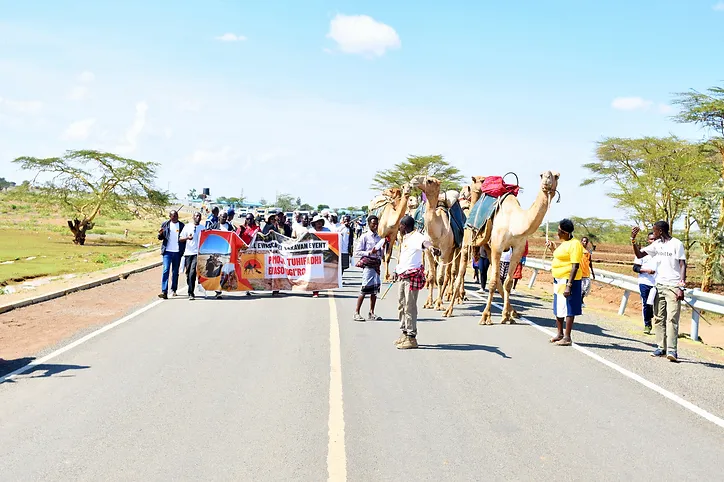
This year’s Camel Caravan has been planned around looking back at the recommendations from the previous Camel Caravans,after analyzing the impact of camel caravan since its inception,it was resolved that there is need to reverse the flow by walking upstream and involving farming communities,conservancies,water resource users’ associations and private farms in this walk to save the Ewaso Ng’iro river.

There is need to make these communities understand the impact of their activities upstream to the pastoral communities in the mid and lower parts of the stream and for the stakeholders and partners to address the challenges facing the river with farmers communities upstream and bring on board pastoralist communities from the lower stream.

This year’s Camel Caravan has been planned around looking back at the recommendations from the previous Camel Caravans,after analyzing the impact of camel caravan since its inception,it was resolved that there is need to reverse the flow by walking upstream and involving farming communities,conservancies,water resource users’ associations and private farms in this walk to save the Ewaso Ng’iro river.

There is need to make these communities understand the impact of their activities upstream to the pastoral communities in the mid and lower parts of the stream and for the stakeholders and partners to address the challenges facing the river with farmers communities upstream and bring on board pastoralist communities from the lower stream.

Together, we make an impact.

Stand in solidarity with Indigenous peoples for land rights, sustainable livelihoods, and cultural preservation.